Pre-Spawn can be an incredible time to fish, but it is not without its trying moments, particularly where rapid changes are concerned. As anglers, we are trained to take note of stability vs. volatility, and conditions are never more volatile than they are in late March through roughly the middle of April. When you consider this period of time in the Kentucky and Tennessee area, you can see highs in the mid-seventies and lows as far down as 35 degrees. If you don’t have a bluebird sky, then you likely have a torrential downpour. Already in the past 2 weeks, I have been chased off the water by 4 separate severe weather incidents. I define severe weather as lightning, everything else is a drizzle, or a breeze, regardless of whether it would flood a river valley or capsize a ship, respectively.
Now there are a lot of articles and videos that cover the mud aspect of March and April. But it seems to me that these pieces, taken collectively, suggest that once the mud clears and the weather stabilizes, and we get what my wife would call, a perfect afternoon (any afternoon where it is not windy and storming during this period gets classified as a perfect afternoon, she is a glass is half full kind of woman), there exists some maxim that implies that the fishing should be full on. You can’t imagine how expectations soar when the water takes on that green tone, like now everything will be ok and they will jump in the boat, such was their discontent with muddy conditions.
Wouldn’t it be great if that was actually true.
In my experience, weather stabilization and water clarity after a period of heavy rain and cold does not necessary imply the resumption of excellent fishing. Sure, you feel great, being warm and dry is awesome after days, sometimes weeks of cold, rain, and high winds. But too often I have noted that along with the relief that comes with pleasant conditions is a stark absence of activity on the water.
So take this week. After horrendous weather over the past weekend (the past 5 weeks actually), a period of stabilization has begun, and the temperatures rose from the 40s/50s up into the high 60s and bright partly cloudy skies. The water temperature is holding in the low 60s, and clarity has shifted from less than 6 inches of visibility to around 24 inches give or take. ie. Muddy to lightly stained. The largemouth spawn is approaching
This translates in many anglers minds that everything should be fantastic, and we should all be catching 25 pound bags. And yet, the reality of the situation was summed up pretty nicely last night when I was loading my boat and a fellow angler called over from his rig and asked if I caught anything. I told him I made a rather pathetic full bag and was enjoying the weather, at which point he started shaking his head. He told me that he threw everything in the boat and came away with nothing.
Not a single bite.
What’s interesting is that I understood exactly what happened just by glancing at the rods on his deck. Big, bold baits jumped off every rod. On the deck of his boat he had rigged up spinners, swim jigs, structure jigs, and enough crankbaits to bring home Norman Thayer’s Walter. Exactly what an aggressive fish coming off of an extended stay next to a stump would be interested in if it were stalking prey.
The problem is they weren’t out there stalking anything. In fact, they were downright docile. Even lazy would be an apt description. He threw those big baits for 5 hours, covered a ton of water, basically everything fishing videos told him to do, but the problem was those were the wrong videos for the conditions of this lake and particularly the demeanor of these fish.
Two fisherman, two boats, one lake. Five fish vs. none. I am good but I am not that good.
The reason as we got into the discussion is that we differed in two areas. The first is how long I was prepared to throw baits at unsatisfied fish, and what was rigged up in the rod locker in case plan A failed. Now I am not getting on this guys case, we talked for a bit and there was no question he was a good fisherman, understood his equipment, lures and presentation, etc. What happened here is a common story that comes down to the pros and cons of the term ‘determination’. And it requires a bit of explanation.
I absolutely hate blanking on a trip. And last year, I decided I was done blanking permanently. As I have mentioned, last year I did not fish any tournaments at all, but rather began the year in January at Harris Chain in Florida with a full rig of glamping gear and fished my way to New York, ultimately to the St. Lawrence river. 300 days on the water and not a single thought of competition. My objectives were far deeper than beating another angler in terms of weight.
My objective was to achieve authenticity. Now I have discussed this in so many contexts that it could mean just about anything on a Thursday morning, but in this particular context, one thing I focused on last year was the ability to catch fish anywhere, in any conditions.
To be an authentic angler means that there are No more excuses. Oh its raining and you can’t figure out where the air meets the water, great! catch fish. Cold front got you down, hypothermia setting in, losing your will to go on in the frosty haze, fantastic! catch fish. Blazing heat and a bluebird sky, feel like swimming with the fishes. Admirable! catch fish. Run your trolling motor into a rock, broke off the prop and can’t go near shore, good thing you have a spare! now catch fish. (That one actually happened).
No blanking. Ever. It gives you a strange clarity on the water. I will give you an interesting example. I took 47th in my first tournament this season. Let me tell you why.
Because I was stupid.
It wasn’t the fact that we had a 30 degree drop in temperature from 62 to 32 in a 24 hour period. It wasn’t because the water was muddy and it was sleeting. It wasn’t because the conditions were literally as bad as they could have been. They were. No it was because I failed to capitalize on what I had learned. Here are the details. I was worried from the beginning that the bite was going to be incredibly tough. So my plan was to default to the dam. Yes the water there is colder, yes if the fish were aware of the pattern, they would be posted in the creeks, near the beds, on the sand bars, and on the hunt for the warmest water they could locate. The problem was that there were very few tributary creeks with warmer water, and I was boat 60 or so. The dam was 500 yards from the take off, had a lot of current, and holds large fish during the winter months. Chances were that some of these fish were still there, and I would have the dam to myself. The plan was to fish the dam for an hour, and then head to the southern rock walls of the main lake to fish the points and long flats as they stretch into the creeks as soon as the dark rock began to warm in the light of the morning.
I caught 2 decent fish in the first 30 minutes of fishing the dam. Off to a great start. Then I left for the southern rock walls. However, as I was leaving I had a sinking feeling that I was making a mistake. This is something I go back and forth on. If you catch 2 fish in 30 minutes, do you keep to the plan, or stay right where you are and go for a made bag.
A bag that you can improve on if you can get it done quickly enough. I shouldn’t have left, but I did because I was determined to stick to the plan. The fishing was terrible everywhere else I went. 2 fish was good enough for 47th place. Nearly half the field blanked.
Bad day for fishing.
Incidentally, I nearly froze to death, got rained on for hours, and enjoyed every minute of it. I think maybe that is the litmus test for whether you should be a professional fisherman. If on the worst most uncomfortable day, where nothing really goes that well, and you were stupid to boot..if on that day you go to sleep thinking how great it really was, and how tomorrow you are going to be even better, perhaps you are in the right occupation, or perhaps you are an idiot. For me, it’s likely both.
The point of telling this story is easy to lose. It began with the right decision and I caught fish, but the right decision with too much determination to stick to plan nevertheless subverted the trip. Imagine what that same determination with the wrong decision can do to you.
The point is making a good bag is first about making a bag at all. And things are always fluid. There should be no actual plan, but rather what I like to call an intimation. Ideas with no definite decision until the last minute. Late dynamic decisioning is the best option for any angler. If things are rough, really rough, the first order of business is to catch fish, any fish you can weigh. You see, 47th is not great, but its not last place. And the points for 47th keep you in the running.
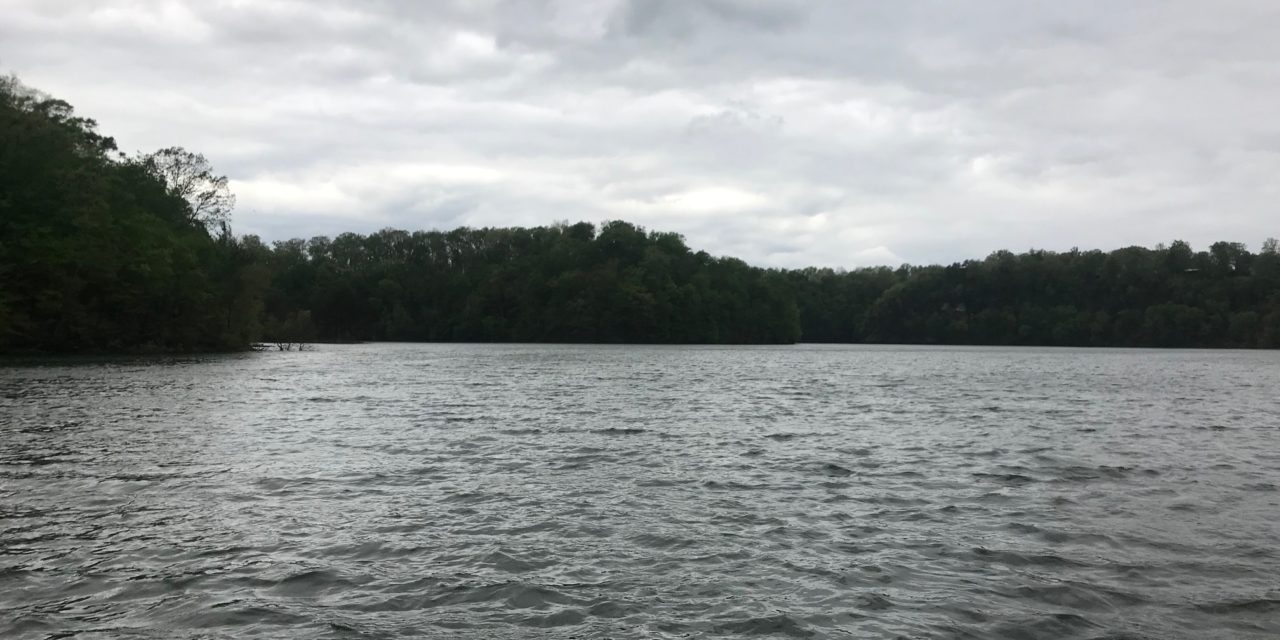
I took this into fishing the other day, and that is why I was capable of making the adjustments necessary to put together a bag on a tough day. I had begun the day in a similar fashion to my fellow anglers. There was some chop on lightly stained water and I began to throw a spinner with a rage swimmer trailer into the extensive cover on the flooded banks. Working the trees, flooded boulder faces, inlets where water was still flowing, etc. I came away with nothing for my efforts. Spinnerbait, nothing, swim jig, nothing. Crankbaits, nothing. creature baits, nope…Now I went through all of this in less than 2 hours. Thorough, but not ignorant of time. Of which I did not have an ample supply. I kept getting sidetracked by the upcoming spawn. I had a preconceived idea that they were in the vicinity of where I was fishing and I kept trying to locate the magic school of fish. Things were grim. And I was not happy about my next decision.
The decision was to accept the plan was not working, to throw it out, and make a new plan, right there on the water. To do that, you must overcome the determination to persevere.
The problem is that all good anglers share the virtue of perseverance, but this is not the case with great anglers. Perseverance is a cornerstone of making it from a beginner to an advanced angler. The problem is that it is a barrier from making it from an advanced to a professional angler.
You have to love the irony. The very thing that makes you pretty good, basically prevents you from being great.
I can’t tell you how many times I have watched anglers fish like it’s a job. Cast after determined cast, no time to spare, one after the other, down the bank, around the point, down the bank they go. I am fairly convinced that for many, this is as far as they will go in terms of improvement. But it only works on a regional level. Nationally, this is disaster.
This is what I learned last year as I beat the banks in unknown waters, eked out catches for the few days or so before getting down to trying to understand a fishery. In the end, when you fish enough, in different lakes, you arrive back at your own perception of fishing, and see that you never had it at all.
You just had perseverance, and then you begin to rebuild your perception of the sport, and move towards authenticity. At least that was what it was like for me. I guess maybe it might be difference for everyone.
Now on the day in question, I chose to downsize, attack the middle of the water column, and increase my rate of water coverage. I stopped focusing on the cover and moved my boat way out into the creek channel. From there I made long casts to the edge of the cover and calm retrieves through a lot of water back to the boat. Here is why I went that direction.
When the bite is tough after a cold front and when the water is moving from muddy to stained, chances are that bass that have been cooped up in very close proximity to cover are going to be on the move. Fish on the bottom often come up the points, bass holding close to shoreline cover often begin to move along flats looking for more optimal positioning. On the monitors, it often appears that the bass are scattered and suspended. Not so, they are migrating. In some cases, I really think they might be stretching their proverbial fins.
This presents an excellent opportunity to present them with a meal that requires minimal effort to take advantage of precisely in the same avenues they are crossing. When I am in this situation, I commonly throw a 3.25 inch Strike King Rage Swimmer on a 1/4 ounce swimbait head.
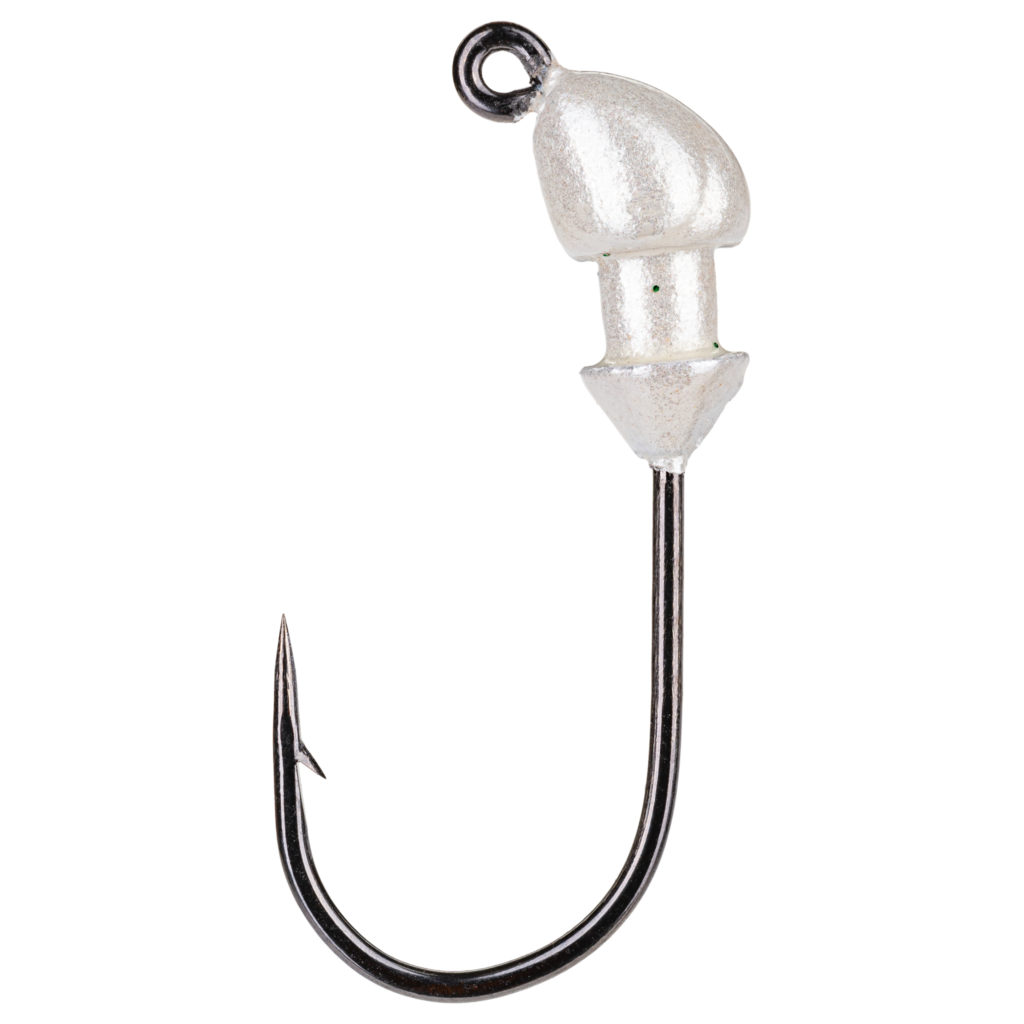
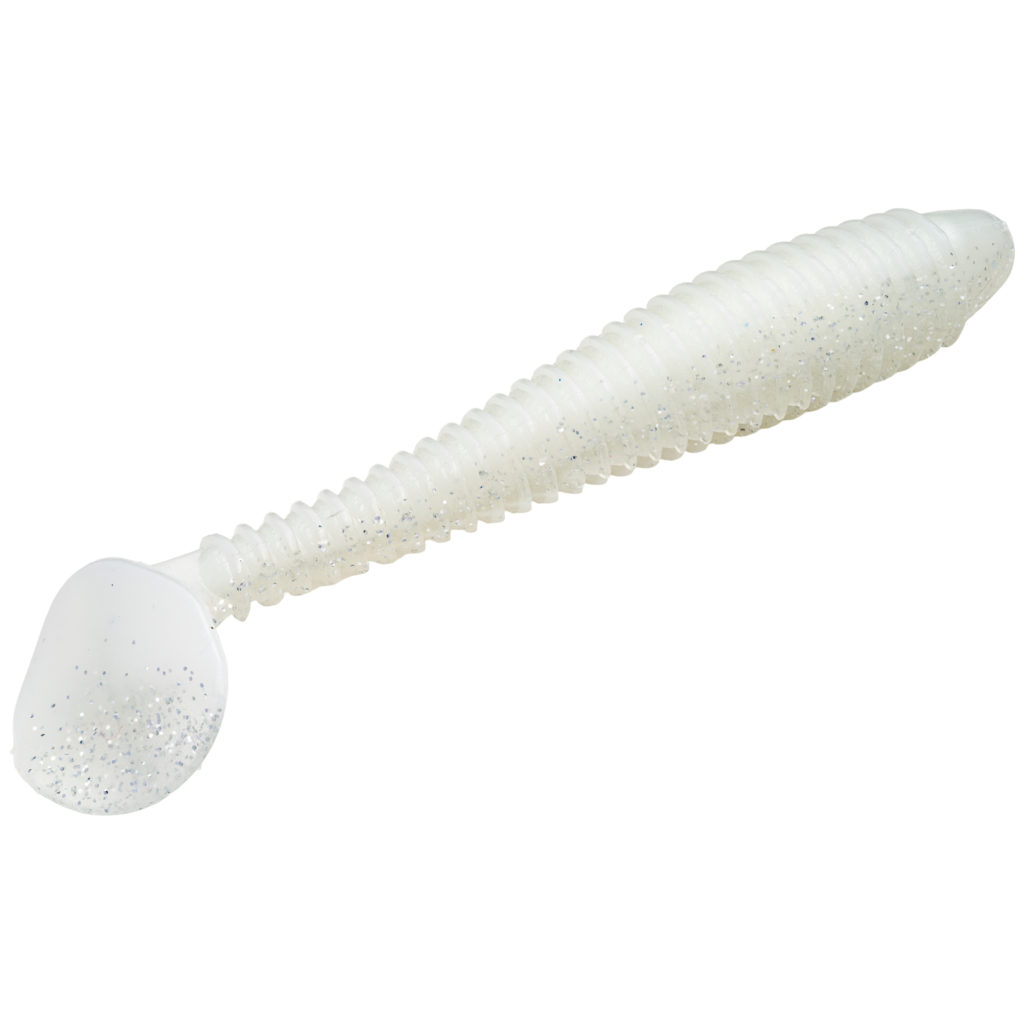
This is a compact profile that I have become very attached to when the bite is tough in any lake where the forage is primarily a wandering baitfish. Things would be different if vegetation were present, or some other lake feature that would connect the food chain to a particular locale. But that is not the case in many reservoir lakes. As we move through the year for example, my posts will shift from Kentucky and Tennessee to the northern states, where the lakes are natural and exhibit heavy vegetation. When the bite gets tough there, other options present themselves. But in a highland reservoir, particularly Lake Cumberland, downsizing to a 1/4 swimbait and making long casts with calm retrieves puts fish in the boat even when they are working double time to avoid that scenario.
The fundamental difference between weekend fisherman and those that pursue this crazy activity on a daily basis often boils down to instinct, conviction, and versatility.
Developing a sense of when things are out of place is critical in fishing, particularly in competition fishing. But developing your instinct has no value if you do not augment it with the conviction to act on your beliefs strategically. You have to begin with intimation, and come to the conclusion whether something is working or not rather quickly. If so, how do you optimize it. If not, you have to have the wherewithal to stop, change gears, and keep on fishing. Finally, being versatile adds options to the potential range of strategies you can employ to make changes that will ultimately turn a tough day into an acceptable day with options for tomorrow, and in that rare case, a complete 180 where you turn a rough start into a wholesale slammer. This versatility comes from two things, experience, and variation of fisheries. That is why it is so important to fish as many lakes in as many regions as you can, it adds tools to the toolbox.
Incidentally, it is not enough to downsize and do the same thing when the bite is tough. I saw this throughout the day. Being the first nice day in a while, I watched the other boats to see what they were up to (always pay attention to other anglers, particularly their position). What is interesting is that for hours, I noticed two things. First, no one seemed to be catching any fish on the banks. Second, I was the only boat 70 yards off the bank, and I was catching fish. Was my approach the best? I don’t know, what I do know is that I could have just as easily come back to the dock with nothing to show for a day of fishing. But blanking is no longer an option.
Change is part of life, and part of fishing. But never for the sake of change.
You need to strategically justify the change in a manner that makes sense, and in a manner that is built on top of the information that you have at hand. When you know, react, don’t wait, catch fish early, catch fish often. Make a bag and improve it.
Give it a try. I think this approach can be a game changer.